🌐
Digital Citizenship · Learnovo Kids
Your child is already a digital citizen. The moment they first went online, they joined a global community with its own rules, risks, and responsibilities. The question is: are they prepared? Digital citizenship for kids in Nigeria is one of the most urgent and most overlooked conversations in parenting today.
Why Digital Citizenship Matters More in Nigeria Than You Think
Nigeria has over 100 million internet users and one of the youngest digital populations in Africa. Nigerian children are increasingly online — for school, entertainment, social media, and gaming — often before their parents fully understand what platforms they are using.
This creates real risks: cyberbullying, exposure to inappropriate content, online predators, financial scams targeting young people, and the long-term consequences of posts that cannot be deleted. Digital citizenship gives children the knowledge and habits to navigate these risks intelligently.
📊
Important context: Studies show that many Nigerian children aged 8–15 regularly encounter harmful content online without knowing how to respond, block, or report it. Digital citizenship education changes this — it builds judgment, not just rules.
The 9 Pillars of Digital Citizenship for Nigerian Children
1. Digital Access
Every child deserves access to the internet and technology. Understanding this right — and advocating for it — is part of being a good digital citizen.
2. Digital Commerce Awareness
Nigerian children are exposed to online transactions from a young age. Understanding how to identify legitimate versus fraudulent online shops, how personal data is used, and how to protect family financial information is essential.
3. Digital Communication
Different online environments require different communication styles. Texting a friend is different from emailing a teacher. Children need to understand context, tone, and the permanence of digital communication.
4. Digital Literacy
The ability to find, evaluate, and create digital content. This overlaps with our full course — read our guide on Digital Literacy for Kids in Nigeria for a detailed breakdown.
5. Digital Etiquette
Treating others with respect online — no cyberbullying, no trolling, no shaming. In Nigeria's highly connected social media culture, children who understand digital etiquette become better peers and community members.
6. Digital Law
Understanding that online actions have real legal consequences — including copyright violations, online harassment, and hacking — even for minors. This connects directly to our Cybersecurity Basics course.
7. Digital Rights and Responsibilities
Every digital citizen has the right to privacy, free expression, and safety online. They also have the responsibility not to violate others' rights. Nigerian children need to understand both sides.
8. Digital Health and Wellbeing
Screen time management, posture, eye health, and recognising when technology is hurting rather than helping. Nigerian parents who discuss these topics proactively produce healthier digital habits in their children.
9. Digital Security
Strong passwords, two-factor authentication, understanding phishing emails, and protecting personal information. These are not advanced topics — children as young as 8 can learn and apply them.
💡
For parents and teachers: The most powerful way to build digital citizenship is through conversation, not restriction. Ask your child what they do online, what they have seen, and what confused or worried them. Make the internet a safe topic before it becomes an urgent one.
How Learnovo Kids Teaches Digital Citizenship
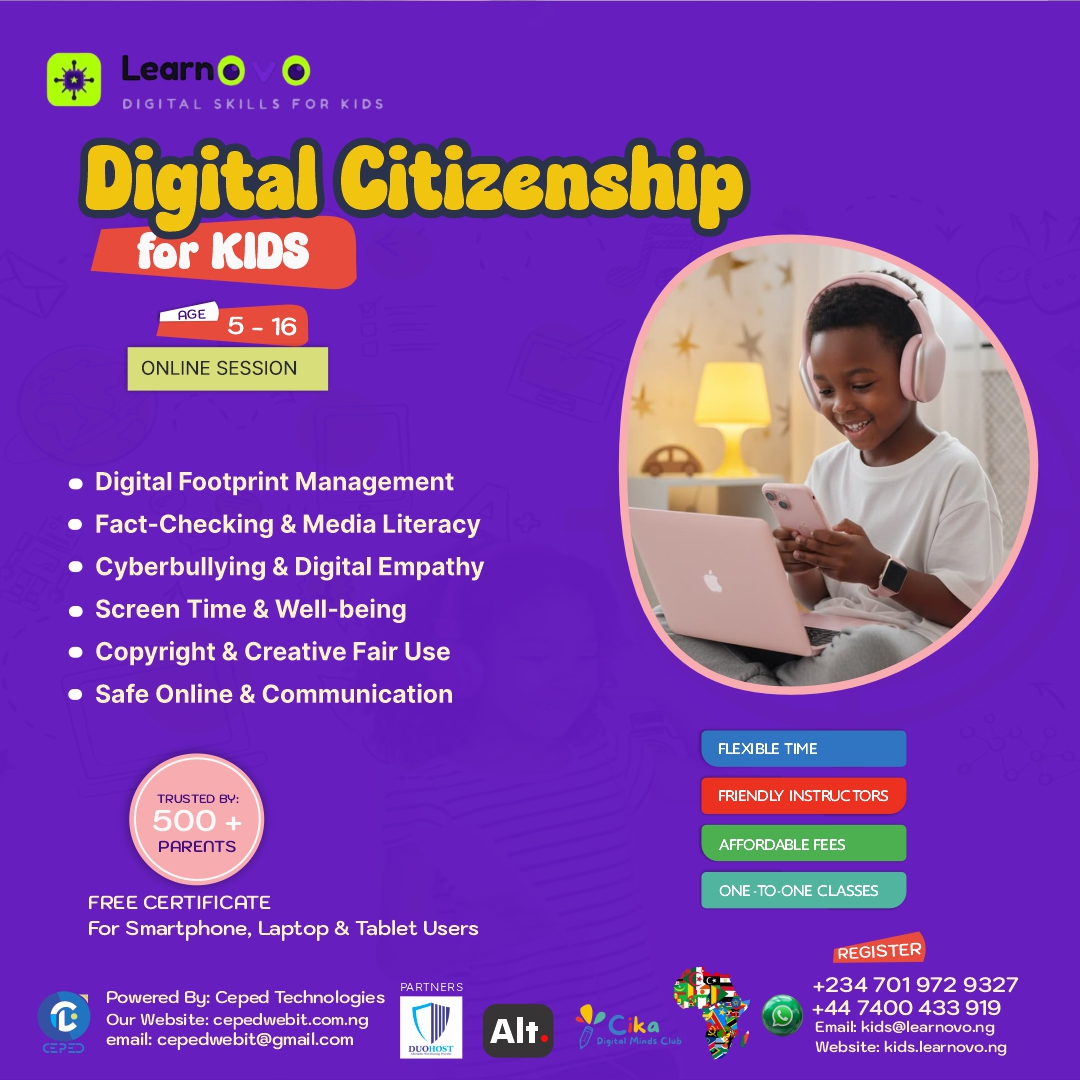
Our Digital Citizenship course goes beyond a list of dos and don'ts. Children engage in real scenarios, debates, and creative projects that build judgment — not just compliance. By the end of the course, they understand why good online behaviour matters, not just what the rules are.
Prepare your child to be safe and responsible online.
Live online classes for Nigerian children ages 7–17.
🌐 See Digital Citizenship Course